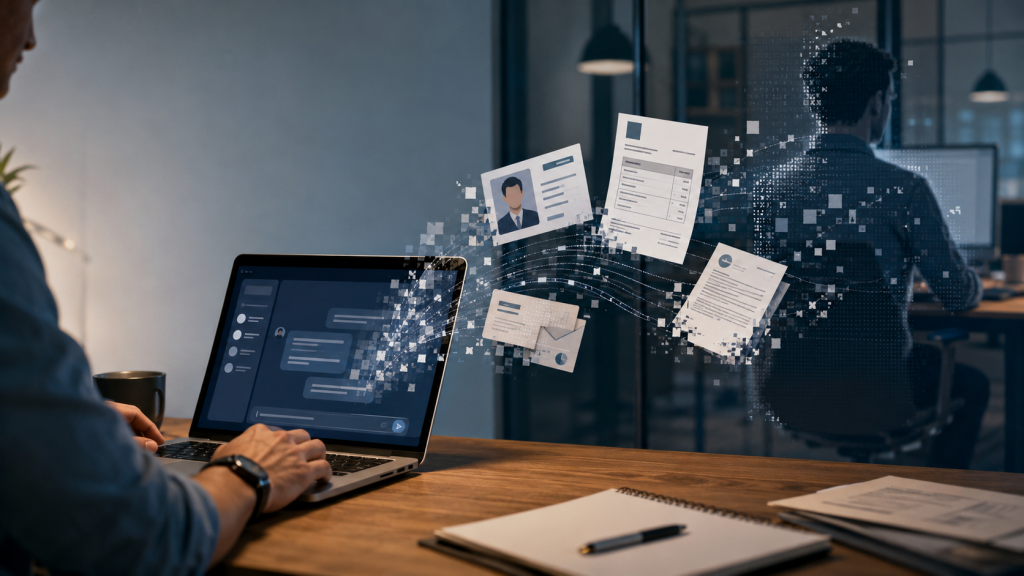
Artificial intelligence can save time. It can help write emails, summarize documents, organize ideas, research topics, and speed up everyday work.
It can also create new risks when people use it carelessly or criminals use it to deceive others.
For small businesses in Wilmington, NC, the concern is not that AI will suddenly take control of the company network. The more realistic problem is that AI makes certain types of fraud easier. It can help someone impersonate an employee, create a convincing phishing email, collect information for identity theft, or trick an employee into sending money or sensitive business data.
AI can also create problems inside the business when employees share information with tools they do not fully understand.
For companies with 10 to 50 users, these risks deserve attention because one mistake can spread quickly. A stolen account, exposed client file, fraudulent payment, or leaked password can affect far more than one employee.
The goal is not to stop using AI. The goal is to use it with the same care you would use with any other tool that touches important business information.
AI Is Making Old Scams Harder to Recognize
Many cyberattacks still begin with something ordinary.
An employee gets an email.
A vendor sends new payment instructions.
Microsoft appears to ask someone to sign in again.
A manager seems to request an urgent transfer.
The difference is that AI can make these messages look much better than they used to.
Bad grammar and strange wording were once common clues that an email might be fake. Those clues are becoming less useful. AI can create professional messages in seconds. It can copy a person's writing style, create realistic business language, and make a scam sound much more believable.
IBM reported in its 2026 Cost of a Data Breach research that one in four malicious breaches it studied was AI-enabled. The company pointed to threats such as deepfake impersonation and AI-enabled malware as part of that change.
For a small business, this means employees cannot depend only on whether something "looks real."
They need to think about whether the request itself makes sense.
That is why protecting business email before suspicious messages reach your employees matters more as scams become harder to spot.
AI Can Make Identity Theft More Convincing
Identity theft has always depended on information.
A criminal may need a name, email address, phone number, job title, password, Social Security number, banking information, or other personal details. AI can help attackers collect, organize, and use that information more effectively.
It can also help them pretend to be someone else.
Imagine an employee receives an email that appears to come from the company owner. The writing sounds right. The name is right. The request mentions a real vendor. The message says a payment needs to be sent quickly.
An employee who is trying to be helpful may act before asking questions.
In more advanced cases, criminals can use AI-generated voices, fake images, or altered video to make impersonation even more believable. The FBI has warned businesses about schemes involving stolen identities, artificial intelligence, and face-swapping technology.
The important lesson is simple: identity can no longer be confirmed only because a message, voice, or image looks familiar.
Businesses need another way to verify important requests.
For example, an employee who receives unexpected banking instructions should call the vendor using a known phone number instead of replying to the email. An employee asked to reset a password should confirm the request through an approved process.
Good security creates a second checkpoint before trust turns into action.
AI Can Lead to Financial Loss Without "Hacking" the Business
Not every cyber loss starts with someone breaking into a server.
Sometimes a criminal simply convinces an employee to send the money.
AI can make business email compromise and payment fraud more believable because attackers can create better messages and impersonate real people more easily. They may research a business online, learn who handles accounting, identify executives, study vendor relationships, and then create a message that fits the situation.
A fake request might involve:
- Changing a vendor's bank account information
- Sending a wire transfer
- Purchasing gift cards
- Updating payroll information
- Paying a false invoice
- Sharing banking or credit card information
- Sending login credentials
For a Wilmington business with 10 to 50 employees, the person receiving that request may know the supposed sender personally. That familiarity can make the request feel even more trustworthy.
This is why financial security is not only an accounting issue.
It is also an identity and cybersecurity issue.
The safest companies build simple verification steps into financial processes. A change to payment instructions should require confirmation. A large transfer should need a second approval. An unusual request from an executive should be verified outside the original email.
AI may make the message more convincing, but a good process can still stop the loss.
Employees Can Accidentally Leak Business Information Into AI Tools
Criminal misuse of AI gets much of the attention, but businesses also need to think about how their own employees use these tools.
Someone may paste a document into an AI system because they want help rewriting it.
Another employee may paste a client email into a chatbot and ask it to create a response.
Someone in accounting may copy financial information into an AI tool to organize a report.
An employee may upload meeting notes that include customer names, passwords, contract terms, pricing, health information, or confidential business plans.
Most of these employees are not trying to create a security problem. They are trying to work faster.
That is exactly why AI data leaks can be easy to miss.
The risk is often created by convenience rather than bad intent.
Businesses should decide what information employees are allowed to enter into AI tools and which AI systems are approved for company use. Sensitive client information, passwords, financial records, patient information, employee records, and confidential company documents should receive special attention.
This is becoming especially important for law firms, dental practices, healthcare offices, accounting firms, financial companies, and other businesses that handle private information every day.
An AI policy does not need to be complicated. Employees simply need clear rules they can understand and follow.
A Stolen Account Can Become a Business-Wide Problem
AI security is closely connected to identity security.
If a criminal steals an employee's Microsoft 365 password, email account, or other login, the attacker may gain access to much more than one system.
They may be able to read email, search past conversations, view files, contact clients, reset passwords, send fake invoices, or impersonate the employee.
That information can then make the next attack even more believable.
This creates a dangerous cycle.
A stolen account provides information. That information helps create a better scam. The better scam may lead to another stolen account or financial loss.
Strong passwords and Multi-Factor Authentication help break that cycle. Password management tools that make secure logins easier for employees can also reduce password reuse, which remains a major weakness in many small businesses.
Employees should not have to invent and remember dozens of passwords on their own. Good systems make the secure choice easier.
AI Makes Employee Training More Important, Not Less
Employees are often told to watch for spelling mistakes, strange email addresses, and poorly written messages.
Those clues still matter, but they are no longer enough.
Employees should also learn to question unusual behavior.
Why is this vendor changing bank information today?
Why does the owner need gift cards?
Why is Microsoft asking me to sign in through this email?
Why does this person suddenly need confidential information?
Why am I being rushed?
Modern security training should help employees recognize the situation, not just the spelling mistakes.
Phishing simulations that help employees practice spotting realistic attacks can show teams how convincing modern scams have become. Ongoing employee security training that builds better everyday habits can help employees understand what to do when something does not feel right.
The goal is not to make employees afraid of every email.
It is to give them permission to slow down.
That small pause can protect the entire company.
AI Can Help Criminals Find Technical Weaknesses Faster
AI can also help attackers search for weaknesses in software and computer systems.
The Identity Theft Resource Center reported an increase in zero-day attacks during the first half of 2026. A zero-day attack takes advantage of a software weakness before many organizations have had time to protect themselves.
For small businesses, the larger lesson is about speed.
Software updates should not sit ignored for months. Old applications should not stay installed forever. Unsupported computers should not remain on the network simply because they still turn on.
Finding security weaknesses before they remain exposed for long periods and keeping systems updated can reduce the opportunities attackers have to work with.
This is one reason proactive IT management matters.
Security problems are much easier to manage when someone is looking for them before employees start experiencing the consequences.
Strong Security Still Depends on Layers
There is no single "AI security product" that solves all of these problems.
Small businesses still need several layers working together.
Email protection helps stop dangerous messages. Multi-Factor Authentication helps protect accounts. Password management reduces password reuse. Training helps employees recognize unusual requests. Software updates close known weaknesses. Backups help the company recover when something goes wrong.
Endpoint detection and response that watches computers for suspicious behavior provides another layer when an attack makes it past the first defenses.
This layered approach matters because every security tool can miss something.
A strong security plan assumes one control may fail and asks what happens next.
If an employee clicks a bad link, does MFA help stop the login?
If an account is stolen, can unusual activity be detected?
If ransomware reaches a computer, can security software stop it?
If important data is damaged, can the business restore it?
That is how security protects the business rather than simply checking boxes.
Small Businesses Need Rules for Using AI
One of the biggest AI security mistakes may be having no rules at all.
Employees are already experimenting with AI tools. Some use them to write emails. Others use them for research, spreadsheets, meeting notes, marketing, customer communication, or document review.
A business does not need to ban AI to manage the risk.
It does need to answer a few basic questions.
Which AI tools are approved?
Can employees use personal AI accounts for company work?
What information should never be entered into an AI system?
Can client documents be uploaded?
Who reviews a new AI tool before employees begin using it?
What happens if an employee accidentally shares sensitive information?
These are business decisions, not just technology decisions.
One of the biggest risks with new technology is that employees often start using it long before leadership creates rules around it. By the time management realizes how widely a tool is being used, it may already be part of everyday work.
Small businesses have an advantage here. With 10 to 50 employees, it is still possible to create simple rules, explain them clearly, and adjust them as the technology changes.
AI Security Is Really About Protecting Trust
A data leak is not only a technology problem.
A stolen identity can affect an employee or client.
A fraudulent payment can affect cash flow.
A compromised email account can damage a customer relationship.
An exposed patient or client record can create legal, compliance, and reputation concerns.
That is why the AI conversation should not begin and end with technology.
It should begin with trust.
Clients trust businesses to protect their information. Employees trust their employer to protect company systems. Business owners trust employees to follow good processes. Vendors trust payment information to remain secure.
AI misuse can put each of those relationships under pressure.
For small businesses in Wilmington, NC, protecting that trust means understanding how AI is changing fraud while continuing to strengthen the security basics that matter most.
You Do Not Need to Fear AI. You Need to Manage It.
AI will continue becoming part of everyday business.
It will help employees work faster. It will improve software. It will become part of Microsoft 365, accounting tools, customer service systems, security platforms, and many of the applications businesses already use.
Criminals will use it too.
That does not mean small businesses should avoid AI. It means leadership should understand the risks before convenience becomes exposure.
Protect email. Protect identities. Verify financial requests. Control access. Train employees. Keep systems updated. Back up important information. Create clear rules about what employees can share with AI tools.
Most importantly, make sure someone is responsible for seeing how all of those pieces fit together.
If you are not sure where your current security gaps may be, Earney IT can review your technology risk score and help identify which areas deserve attention first. For a Wilmington, NC small business, a clear picture of your current risk is a practical place to start.
Frequently Asked Questions
Can AI cause identity theft at a small business?
AI can make identity theft easier by helping criminals create convincing emails, fake documents, false login pages, voice impersonations, and other scams. The AI itself is not stealing the identity. A criminal is using AI to make the fraud harder to recognize.
Can employees accidentally leak business data through AI?
Yes. Employees may paste client information, financial data, passwords, contracts, patient information, or other private business information into an AI tool without realizing where that data may go or how it may be stored. Businesses need clear rules about what employees can and cannot share with AI systems.
Can AI scams cause financial losses?
Yes. Criminals can use AI to impersonate owners, executives, vendors, or employees and request wire transfers, payment changes, gift cards, passwords, or sensitive financial information. A believable message can lead to a real financial loss if employees do not verify the request another way.
What should a small business do to reduce AI security risks?
Start with the basics: protect email, use Multi-Factor Authentication, require strong passwords, train employees, keep software updated, control account access, back up important data, and create rules for how employees use AI tools.